You're the one holding the reins.
Your wants are the horses: hungry, grumpy, wanting, scared. They pull hard, but they don't decide where you go. You do.
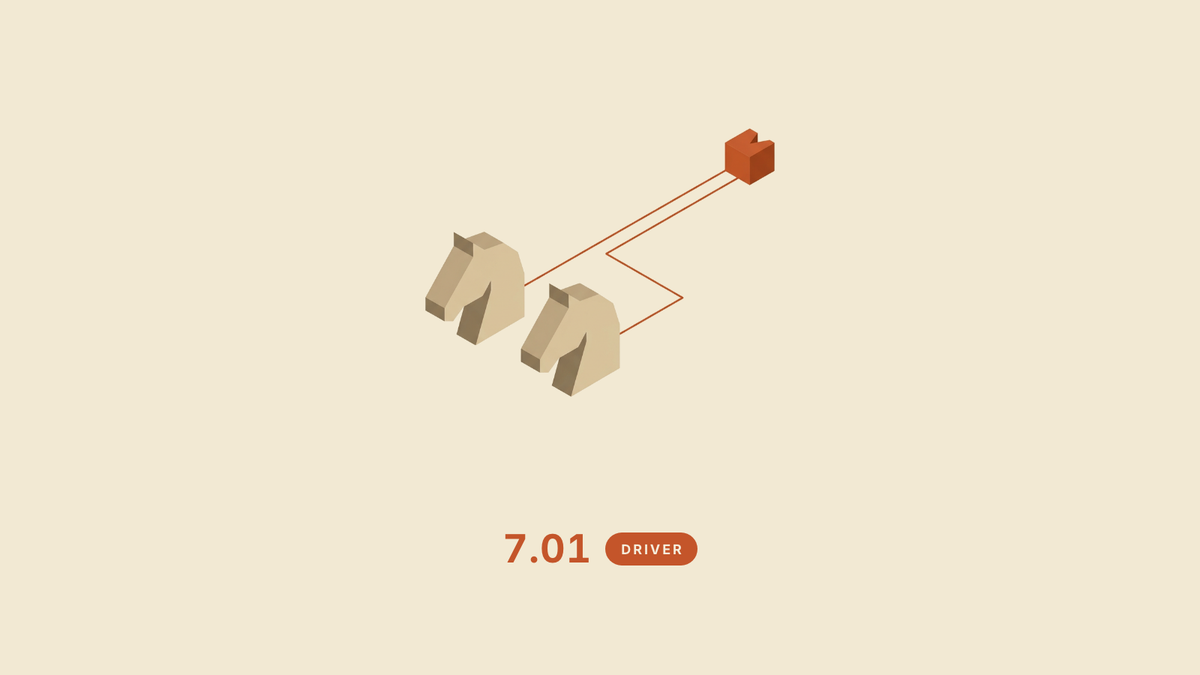
You're seven now, and that's big enough for a secret. It's a real one, the kind grown-ups don't always tell kids. Ready?
Picture a chariot. A chariot is an old cart with two big wheels. It has no roof, no seatbelts, and no cup holders. Two strong horses pull it, and one person stands in the back holding the reins. The reins are long straps that tell the horses where to go. Pull left, and they go left. Pull right, and they go right.
Horses are wonderful. They're strong and fast. But horses have one big problem. They don't think about the road. They just go wherever they want to go, right now. If one horse smells grass, it pulls to the left. If the other one sees a squirrel, it pulls to the right. Then the cart spins in circles until the driver is dizzy. If nobody holds the reins, the cart ends up in a ditch. With you in it. Covered in mud. And probably a squirrel.
Here's the secret. You have horses too. You can't see them, but they're there, and you've met every one of them.
First, there's your hungry horse. It wants a snack right now, even when dinner is five minutes away. Especially when dinner is five minutes away. At the store, it sees the cookies and pulls you toward them before you've decided anything.
Next, there's your grumpy horse. It wakes up when you're tired, and it wants to yell at whoever is closest. Sometimes that's me. Once it yelled at a sock for a long time. The sock never said sorry.
Then there's your wanting horse. When it sees something it likes, it has to have it. A toy, a game, the last cookie, the front seat. It pulls you like a magnet and whispers, "You need this." You don't really need it. The horse just thinks you do.
And last, there's your scared horse. It wants to run away from anything new. New kids, new places, new vegetables. Especially the green ones.
Which of your horses do you think pulls the hardest?
Your horses aren't bad. Everybody has them. Grown-ups have big ones. Grown-up horses get very grumpy in traffic. And horses help you, too. The hungry horse makes sure you eat. The scared horse keeps you away from the edge of a cliff.
But your horses are not you. You're the one holding the reins.
So what does holding the reins look like? Say a friend grabs your toy. Your grumpy horse wants to grab it right back and give a shove. That's the horse pulling. But then you stop. You take a big breath and count to three. Then you say, "Hey, I was playing with that." That's you, pulling back on the reins.
Or say the show ends, and you want one more. Your wanting horse is pulling so hard. "One more! Just one more!" But you turn it off anyway. That's you.
Want to know something? My horses win sometimes too. When I'm hungry and tired, my grumpy horse gets loud. I use a voice I don't like. Then I stop and take a breath. I say sorry. That's how grown-ups take the reins back. Every time you do it, your hands get a little stronger.
There's a very old story I want to tell you. Long ago, there was a young man. He was the best in the whole land with a bow and arrow. Everyone said he was the bravest of all.
One morning, he rode his chariot out to a giant battle. He looked out at the flags and the drums and all the people. And he froze. His hands started to shake. He sat down in the cart like a sack of potatoes and said, "I can't do this." All of his horses were pulling at once.
Guess who was driving his chariot that day? It was his best friend. His friend could have yelled at him. He could have said, "Get up! Stop being silly!" But he didn't. He stopped the horses. He sat down right next to him and said, "Okay. Let's talk."
So they talked, for a long, long time. They talked about what was scary and what was right. They talked about who he really was. Little by little, the young man's hands stopped shaking, and his horses grew calm. Then he stood up and picked up his bow. His friend didn't take the reins away from him. He helped him take them back.
That's what I want to be for you. Some days your horses will win. That's okay. When it happens, you won't have to sit in the ditch by yourself. I'll come and sit right next to you, and we'll take the reins back together.
But here's the most important part, so listen closely. Nobody else can drive your chariot. Not your friends, not your teacher, not even me. I can sit beside you and I can help, but the reins are in your hands. Your horses will pull your whole life. They'll pull when you're eight, and when you're twelve, and when you're a grown-up with a beard. Maybe. And every single time, you get to choose where you go.
So the next time a horse pulls hard, ask yourself one question: who's driving?
You are. You're the one holding the reins.
After reading
At bedtime, ask him: "Which horse pulled hardest today?" Let him answer, and ask what happened. Then answer the same question yourself, with something small and true from your day, like "My hungry horse wanted a second cookie, and I let it win." If he can't think of one, help him: "Was it the grumpy horse when it was time to stop playing?" Keep it light, with no lesson attached. For the rest of the week, when you see a horse pulling, his or yours, ask quietly, "Who's driving?" Then wait a breath, and let him take the reins himself.
What to watch for
The goal: he can notice a want before he acts on it, and give it a name.
- It's landing when he pauses before grabbing, shouting or quitting, even for a second.
- It's landing when he names the horse himself: "my grumpy horse is pulling."
- It's landing when he catches you, and when he takes the reins back on his own after losing them.
- Careful: if he starts saying "my horse did it," the picture has turned into an excuse. The horse pulled, and the driver still chose. Say that kindly.
- Careful: don't ask "Who's driving?" in the middle of a meltdown. Wait for the wave to pass, then talk about it.