Talk to yourself like you'd talk to a friend.
There's a voice in your head that talks all day. When you miss the kick or spill the milk, it can be a bully or a friend. Let it be the friend.
Here's something funny about your head. There's a voice in there that talks all day long. It talks when you wake up. It talks when you brush your teeth. It even talks when nobody else is talking. Try it right now. Be very quiet. Did you hear it? It probably said, "What voice?" That's the one.
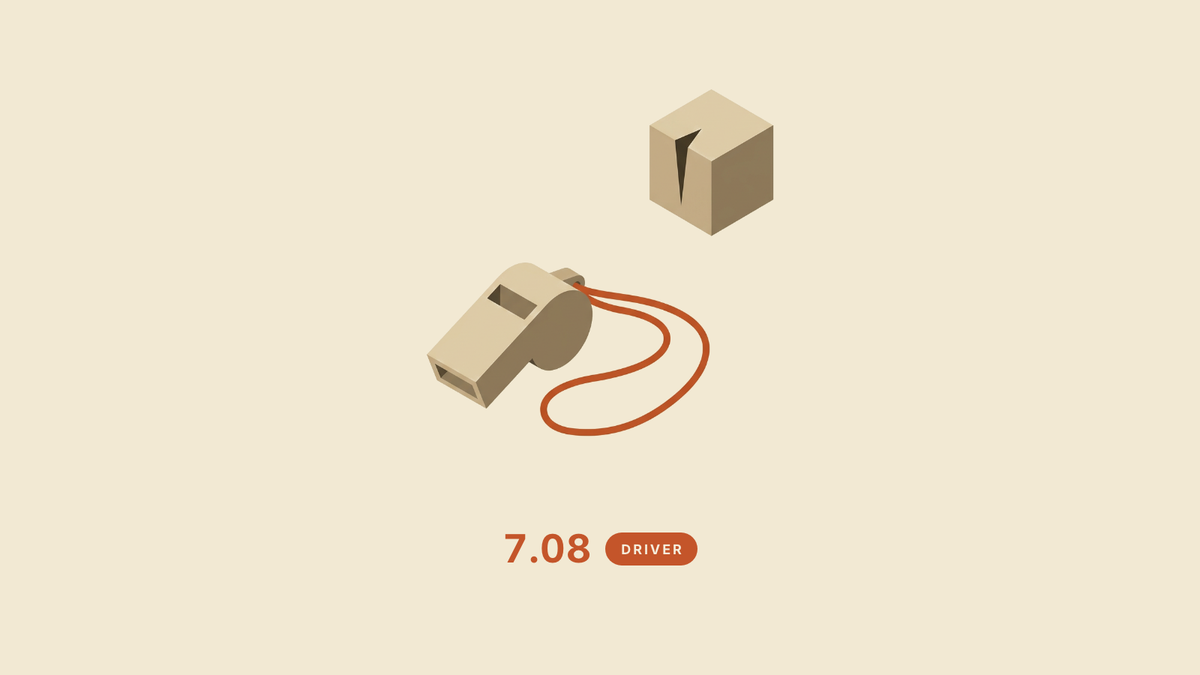
I like to picture that voice as a coach. A coach is the person who helps a team get better. Coaches wear a whistle around their neck. When something happens, they blow it. Tweeeet! Then they tell you what they think.
Now here's the thing. There are two kinds of coaches.
The first kind is a bully coach. The bully coach blows the whistle at everything. You miss the ball. Tweeeet! "You're useless!" You spell a word wrong. Tweeeet! "You're so stupid!" You sneeze. Tweeeet! "Terrible sneeze! Worst sneeze ever!" The bully coach is very loud. And the bully coach is almost never right.
The second kind is a friend coach. The friend coach has a whistle too. You miss the ball. Tweeeet! "Missed. Keep your eye on it, and try again." You spell a word wrong. Tweeeet! "Tricky one. Let's look at it together." The friend coach tells the truth. But the friend coach is on your side. And at half time, the friend coach brings orange slices.
You get to pick which coach you listen to.
Here's a trick to tell them apart. Pretend your best friend just spilled the milk. Milk is everywhere. It's on the table. It's dripping on the floor. The dog is very happy about it. Would you look at your friend and yell, "You're stupid! You're the worst milk-pourer in the whole universe!"?
No way. Your friend would look at you like you had broccoli growing out of your ears. You'd probably say, "Oops! Let's grab a towel." Maybe you'd even laugh.
So when the voice in your head says something mean, ask it one question. Would I say that to a friend? If the answer is no, then that's the bully coach talking. And you don't have to listen to the bully coach.
What does your bully coach say when something goes wrong? What would your friend coach say instead?
The bully coach likes big words. Stupid. Useless. Worthless. Those words are not true about you. Not even a tiny bit. A mistake is just a thing that happened, one time, on one day. A friend coach knows the difference. And here is something I know for sure. Nothing you get wrong can change what you're worth. Not a missed ball. Not a spelled-wrong word. Not a whole cup of spilled milk.
Here's a grown-up secret. I have a bully coach too. When I forget something or break something, my bully coach blows the whistle. It's so loud, I'm surprised nobody else hears it. It says mean things to me in my own head. Then I stop. I ask myself the question. Would I say that to a friend? And I switch coaches.
Being a friend to yourself doesn't mean pretending everything was perfect. If the ball went into the bushes, a friend coach won't say, "Best kick ever!" A friend coach says, "That one went in the bushes. Let's go get it." The friend coach tells you the truth. It just tells it kindly.
Here comes the young man from the chariot story again. He was the best archer in the whole land. On the morning of the big battle, he dropped his bow. He sat down in the chariot. He put his face in his hands.
"I can't do this," he said. "I'm no good. I'm the worst. Everyone will see."
The best archer in the whole land said he was no good! That's what a bully coach can do. It can make even the best archer forget who he is.
His friend, the driver, turned around. He didn't shout. He didn't laugh. He said, "Stand up. Lift yourself up. Don't push yourself down."
The young man looked up. "But how?"
His friend said, "Your own mind can be your best friend. Or it can be your worst enemy. An enemy is someone who is against you. Talk to yourself like a friend would, and your mind becomes your friend."
The young man thought about that. He picked up his bow. Slowly, he stood up again. And this time, the coach in his head was a friend.
That's what I want for you. When you mess up, and everybody messes up, I hope you hear the friend coach. I hope you say, "Oops. Let's try again," instead of "I'm stupid." Because you're going to be in your own head your whole life. That's a long time to spend with a bully. It's a wonderful time to spend with a friend.
So the next time you miss the kick or spill the milk, listen for the whistle. Tweeeet! Then ask the question. Would I say that to a friend? And let the friend coach talk.
Talk to yourself like you'd talk to a friend.
After reading
At bedtime, ask him: "What does your bully coach say when something goes wrong? What would your friend coach say?" Go first with something small and true, like "When I burned the toast, my bully coach said 'You can't even make toast.' My friend coach said 'Too long. Next time, set a timer.'" If he's stuck, help him: "What about the last time something spilled or broke?" For the rest of the week, when you hear him say "I'm stupid" or "I'm the worst", don't argue with him. Ask the kid line, quietly: "Would you say that to a friend?" Then let him find the friend-coach words himself. When your own bully coach talks out loud, catch it in front of him and switch.
What to watch for
The goal: when he makes a mistake, he can swap "I'm stupid" for a kinder, true sentence about what happened.
- It's landing when he catches himself mid-sentence ("I'm so st— I mean, that was tricky").
- It's landing when he says what went wrong and what to try next, instead of what he is.
- It's landing when he asks you "Would you say that to a friend?" after you're hard on yourself.
- Careful: don't use the kid line in the first hot minute, or as a correction he has to say on cue. Let him be upset first, then ask it softly.
- Careful: if the harsh words come very often, or get bigger than "I'm stupid", talk to his teacher or doctor. Sometimes there's more going on, and that's worth knowing early.