Finish what you start.
A half-built thing can't do anything yet. The last bit is the hardest part, and it's also where it gets good. Finish it, then start the next one.
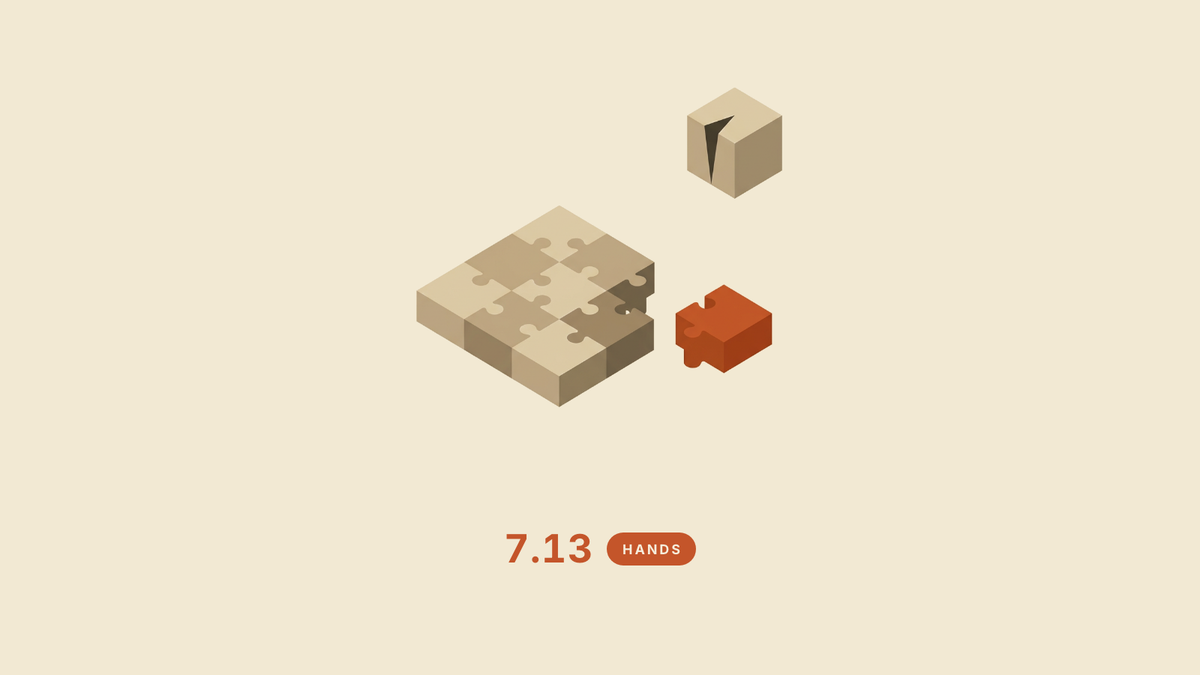
Picture a jigsaw puzzle on the table. It's a big one, with a hundred pieces. You've been working on it all afternoon. You found all the corners. You found all the edges. You even did the sky. That was very hard. The sky is just blue, blue, blue everywhere.
Now there's only one piece left. One little hole in the middle of the picture. And you know what? You're tired. You'd rather go play outside. So you walk away. The puzzle sits there, forever, with a hole in it. Like a smile with a missing tooth.
That's what happens when we don't finish things.
Here's the thing about half-built things. They can't do anything yet. A half-built bridge doesn't help anybody cross the river. Cars drive onto it and go splash. A half-built sandcastle is just a pile of sand. A half-drawn dragon with no head is very confusing. Is it a dragon? Is it a potato with wings? Nobody knows.
And here's the tricky part. The end is usually the hardest bit. The top of a block tower is the wobbliest part. The last page of a story is where you have to think up an ending. The last bit of tidying is the stuff under the bed, and nobody knows what's under there. It might be a sock. It might be a sandwich from last week.
So the end is when we most want to quit. Just when it gets hardest.
But the end is also where it gets good. When you finish the puzzle, you finally see the whole picture. When you finish the tower, you get to knock it over. Crash! When you finish the drawing, you can stick it on the fridge. You don't get any of that from a half-built thing. All the good stuff is at the end.
And something else happens when you finish. You learn the hardest part. Anyone can start a story. But only finishers learn how to write an ending. Anyone can start a tower. Only finishers learn how to make the top stay up.
So here's what I hope you'll try. When you start something, take it all the way. Put in the last piece. Then start the next thing. One at a time, start to finish.
What's something you started that you could finish this week?
Here's a grown-up secret. Lots of grown-ups have a drawer full of things they didn't finish. A book they stopped reading in the middle. A craft with the glue still in the bag. A puzzle with three pieces missing. Most homes have a drawer like that somewhere. Every time I finish something from that drawer, I feel ten feet tall.
Finishing doesn't mean you can never stop. Say you try something properly, for a good long time, and it's really not for you. Then you can stop. That's okay. The thing to watch out for is stopping right at the end, just because the end got hard. That's when one more push makes all the difference.
There's a very old story about a race. A hare and a tortoise were going to race. A hare is like a big, fast rabbit. A tortoise is like a turtle that lives on land. It's very, very slow.
The hare laughed. "You? Race me? I'll be finished before you take your first step!"
"We'll see," said the tortoise.
Ready, set, go! The hare zoomed off. Zoom! He was so fast that his ears flapped. Soon the tortoise was just a little dot behind him. The hare looked back and laughed. "This is too easy," he said. "I'll have a quick nap." He lay down under a tree. Soon he was snoring. Zzzzz.
The tortoise kept going. Step. Step. Step. It was hot. Her legs were tired. The finish line was very far away. But she didn't stop. Step. Step. Step.
She walked past the hare, who was still snoring. Zzzzz. A bird landed on his nose, and he didn't even wake up.
Step. Step. Step. The tortoise was almost there. Then the hare woke up with a snort. He saw the tortoise near the finish line. He ran as fast as his legs could go. Zoom! But it was too late. The tortoise stepped over the line. She had won!
The hare was the fastest starter in the whole forest. But the tortoise was the finisher. And finishing is what wins.
That's what I want for you. You don't have to be the fastest. You don't have to be the best. You just have to keep going, step by step, all the way to the end. Then put in the last piece, and look at the whole picture. You made that.
Finish what you start.
After reading
At bedtime, ask him: "What's something you started that you could finish this week?" Go first with something small and true, like "I started fixing that wobbly chair and never finished. I'll finish it on Saturday." If he's stuck, help him: "What about that drawing, or the Lego you were building?" Pick one thing each and agree when you'll finish it. For the rest of the week, when he's about to walk away from something nearly done, say the kid line: "Finish it." When either of you finishes something, make a small fuss about it.
What to watch for
The goal: he takes one project all the way to the end, even when the end gets hard.
- It's landing when he goes back to something unfinished without being asked.
- It's landing when he says "Finish it" to himself, or to you.
- It's landing when he shows you a finished thing and tells you which part was hardest.
- Careful: don't turn this into "never quit anything". If he's given something a fair try and really doesn't like it, he's allowed to stop. The lesson is about the last stretch, not about being stuck forever.
- Careful: help him pick small things to finish at first. A finished small thing beats a giant half-thing.